
Cochran Parole Versus Probation
Texas assigns three different jobs to different bodies. The Texas Board of Pardons and Paroles, or BPP, decides parole and discretionary mandatory-supervision cases. The TDCJ Parole Division supervises people after release on either status. Cochran County probation, formally called community supervision, is ordered by a court and handled through the local Community Supervision and Corrections Department, or CSCD. A person can live outside jail under either system, but the documents, offices, and search methods are not interchangeable.
Parole is a conditional release from prison while part of the sentence remains. Mandatory supervision is a statutory release path with its own eligibility and review rules. Probation lets a court supervise a person in the community under the judgment, sometimes instead of prison or after a short jail term. Discharge means the controlling sentence or supervision term has ended. It should never be inferred merely because a person is no longer incarcerated.
| Question | Parole or mandatory supervision | Probation |
|---|---|---|
| Decision source | BPP and governing statutes | Sentencing court |
| Supervising office | TDCJ Parole Division | Cochran County CSCD |
| Public starting point | TDCJ detail, IVSS, BPP vote | Court judgment and docket |
| Local contact | Lubbock District Parole Office | Adult Probation, Room 204 |
Verify Cochran Parole Status
Begin with the TDCJ offender search when the person served a Texas prison or state-jail sentence. An SID or TDCJ number is safer than a name match. Open the correct detail and select Parole Review Information near the bottom. That page can show the review stage, Board vote codes, and later review information. TDCJ online data updates only on working days and is at least 24 hours old, so it should not be treated as a real-time release desk.
- Confirm identity with a TDCJ or SID number, name, date of birth, offense, and county of conviction where available.
- Read the custody status, Projected Release Date, and Parole Review Information as separate fields.
- Interpret the complete current BPP vote code through the official vote-options page. Conditions attached to an FI approval matter.
- Check IVSS for current custody or parole and mandatory-supervision status and notification options.
- After approval, use TDCJ's parole-release status line at 512-406-5202 when an authoritative status is needed.
An FI vote is an approval decision, not a completed departure. Treatment, a residence plan, a specified month, record audit, or other prerelease work may remain. Approval can also be withdrawn. Physical release is established only when TDCJ completes processing and the status record changes.
Cochran Probation Record Path
For probation ordered in a Cochran County case, obtain the judgment and docket from the clerk. The file may show the community-supervision order, term, conditions, modification, revocation, or termination. It explains the legal status, while the CSCD administers supervision. No statewide public person-level probation lookup was found, and the county page publishes no public reporting calendar or check-in workflow.
Contact the local office only after confirming the court system. An office listing does not prove that a named person remains supervised, and privacy or operational rules may limit what staff will disclose. The court record is the durable source for the order. The local department is the correct source for its own process.
Cochran County Adult Probation / CSCDGeorge Lopez
Room 204, Cochran County Courthouse
100 N. Main, Morton, TX 79346
Phone: 806-266-5074
The Texas Community Justice Assistance Division supports and oversees CSCD programs but does not directly supervise each probationer. Calling TDCJ Parole Division about a local probation order sends the question to the wrong system.
Cochran Parole Office Route
Cochran County is assigned to the Lubbock District Parole Office, a Region V district reentry center. The official TDCJ county cross-reference and regional office directory support that assignment. The listing is a routing fact, not proof that any individual is on parole. Verify the person's state status first, then ask the office about the right confirmation process.
Lubbock District Parole Office (DRC)1720 E. Regis St.
Lubbock, TX 79403
Phone: 806-747-8282
Fax: 806-747-8407
Do not publish a person's reporting time or precise location. Supervision information can affect safety and privacy. The useful public questions are whether the state record shows parole or mandatory supervision, which office is assigned by official records, and whether the term has ended or remains active.
The official Region V directory displays the Lubbock route used for Cochran County parole matters.
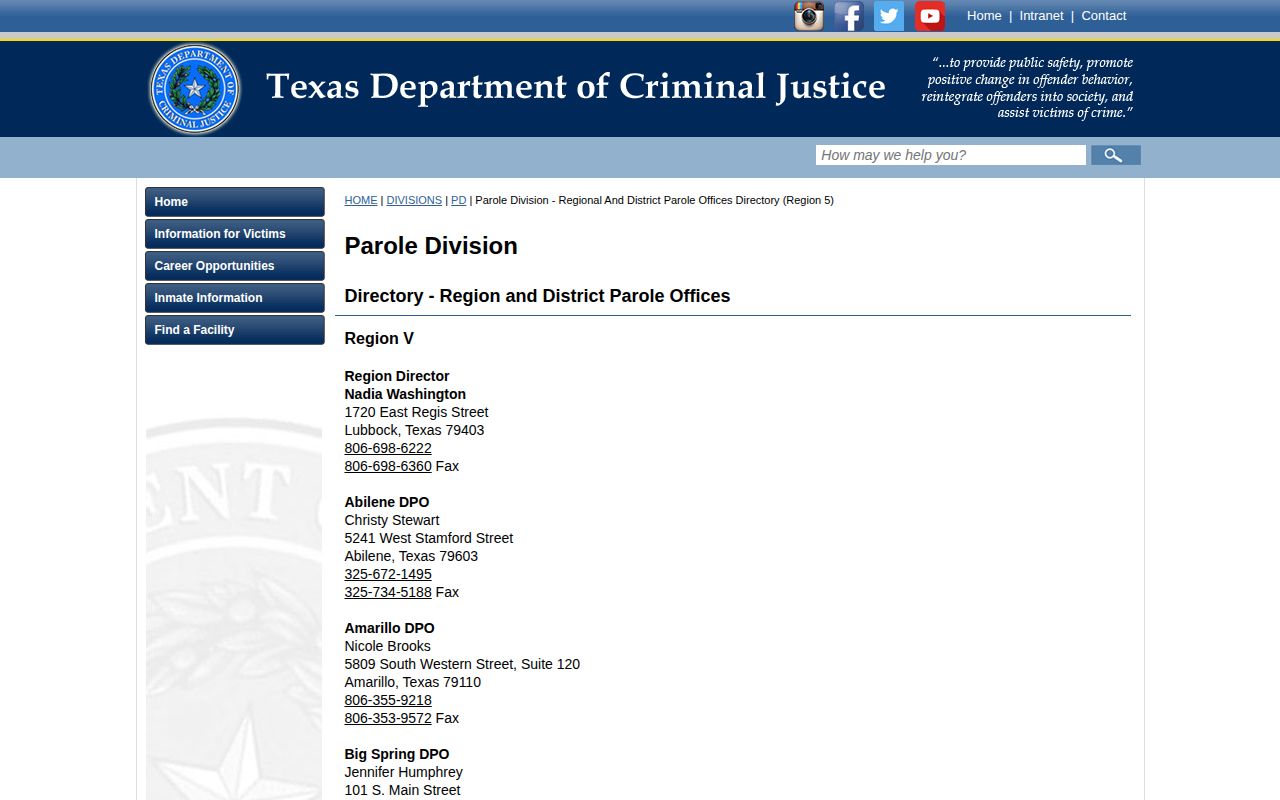
The regional listing should be paired with a person-specific TDCJ or IVSS status before staff is contacted.
Cochran Parole Review Timing
Ordinary Texas parole review does not use a formal hearing with the incarcerated person present. There is therefore no honest statewide calendar of ordinary person-facing parole hearings to browse. BPP gathers a file and panel members vote. The case-specific TDCJ Parole Review Information display, official review-process material, and current vote-code definitions are the useful sources.
The BPP ordinary-review FAQ documents that the process is not a formal hearing. Review timing depends on eligibility, case preparation, the panel process, and any later conditions. A denial can set a future review date. An approval can require a program or other action before release.
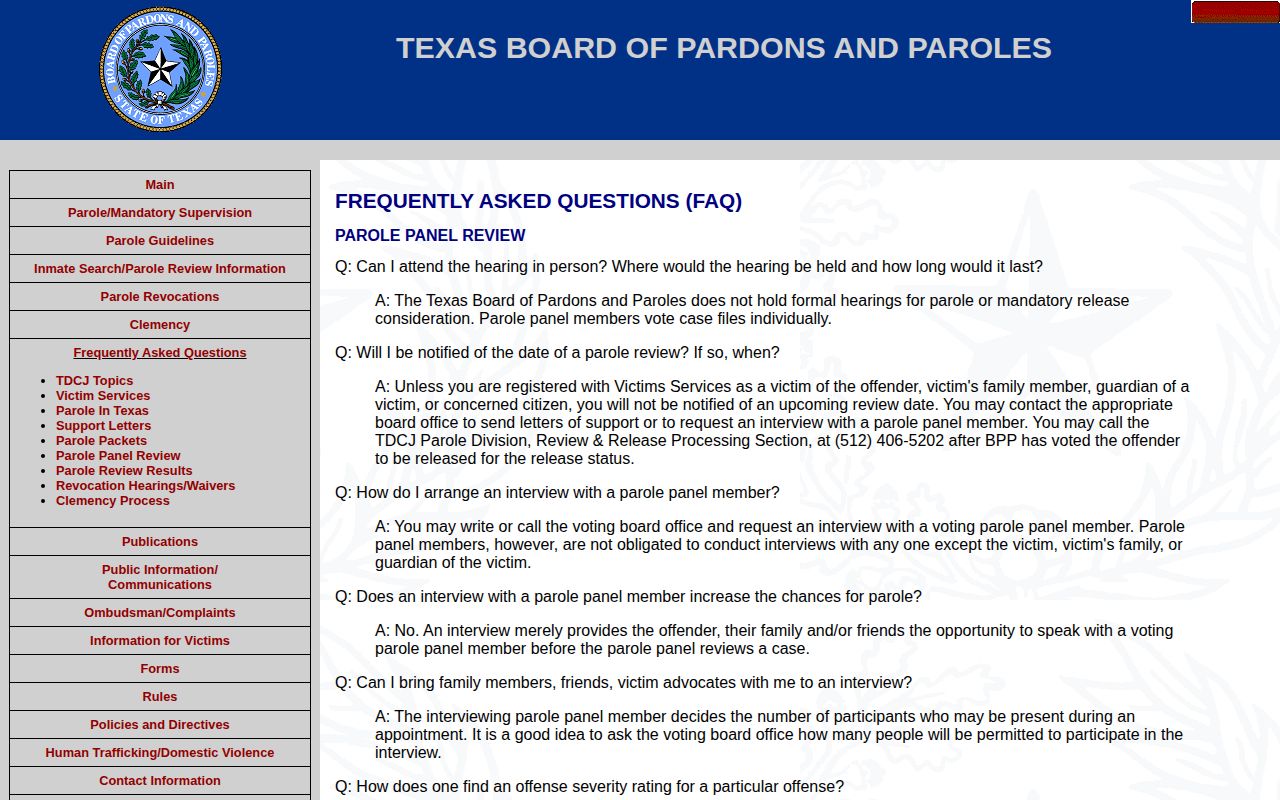
This official explanation prevents a revocation-hearing schedule from being mislabeled as an ordinary parole calendar.
Vote codes must be read in full. The BPP vote-options page defines current approval and denial results.
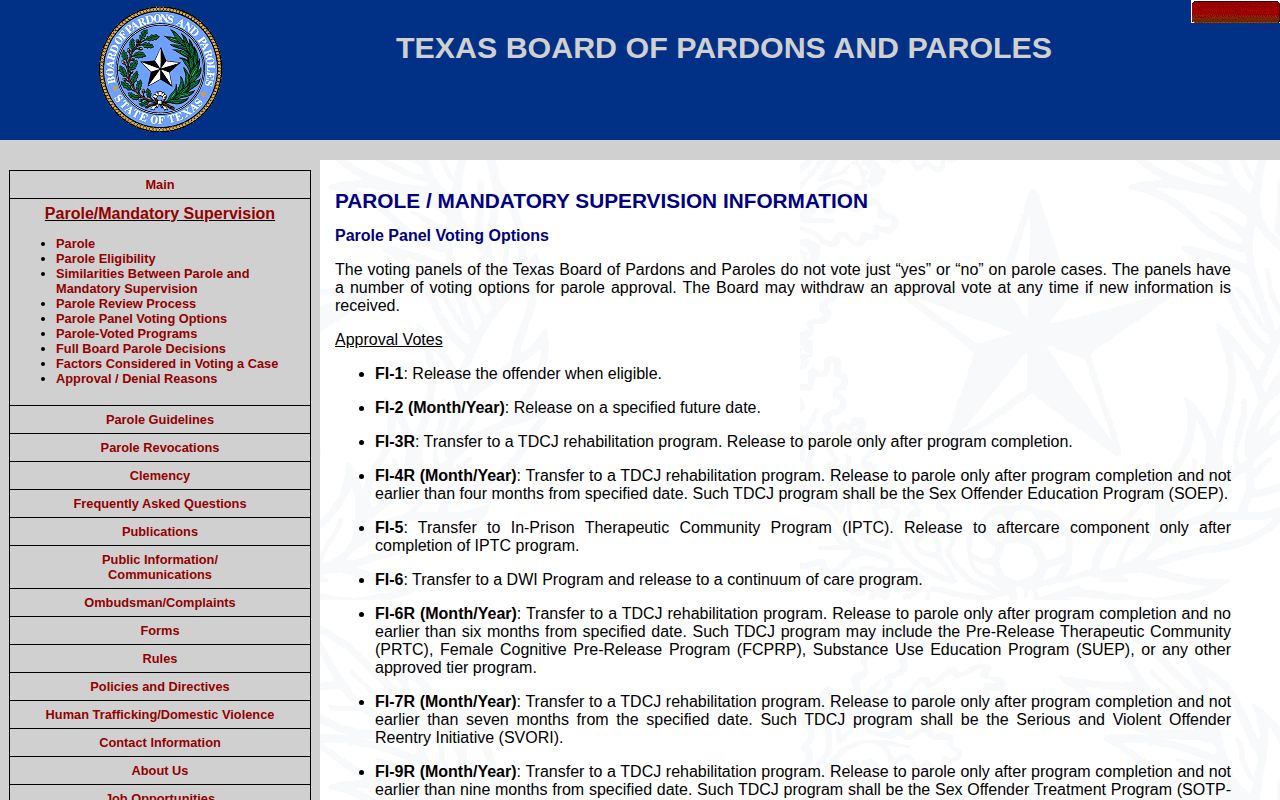
A vote result establishes a decision stage, not the date a person physically left custody.
Cochran Warrants and Revocation
A parole warrant is not a new conviction. TDCJ explains that a warrant can follow an alleged new offense, indictment, absconding, or a claimed supervision-rule violation. An absconder is a person alleged to have stopped reporting or left supervision without authority. The warrant may remain until arrest or withdrawal. A revocation process decides whether release to supervision continues.
IVSS registrants can receive notices involving warrant issue, withdrawal, arrest, and revocation. A Cochran jail record showing a parole hold proves current booking information, not the complete statewide history. No official Cochran absconder list was found. Use the state parole channels instead of recasting the county's current roster as a supervision list.
A warrant or hold can return a released person to custody, but only the state supervision record and proceeding establish the outcome.
Cochran Release Reentry Help
The TDCJ Rehabilitation and Reentry Division publishes a statewide resource guide and navigation help at 877-887-6151, 512-671-2134, and RRD@tdcj.texas.gov. This is a route for people leaving TDCJ custody. It should not be presented as an automatic service for a person who simply bonded out of Cochran County Jail.
TDCJ's three-phase reentry program may help eligible state releases obtain a replacement Social Security card, certified birth certificate, and Texas identification at release. Eligibility and participation belong to the state program. Local probation clients and county jail releases should ask their responsible office what help applies rather than assuming that state-prison benefits transfer to every release type.
If a local release entry is wrong, identify the exact Sheriff record and submit supporting court or agency documents with a correction request. If the error lies in the judgment or docket, contact the clerk. Reentry help cannot rewrite an originating public record.
Confirm Cochran Supervision End
A person outside prison may still be serving a sentence on parole or mandatory supervision. Likewise, release from the Cochran jail does not reveal whether a court ordered probation. To confirm the end of supervision, obtain the state discharge information or local court order that terminates or completes the term. A blank locator result is inconclusive because online history retention is not promised.
For state history after discharge, email pia@tdcj.texas.gov with the full name and seven-digit TDCJ number. If the number is unknown, TDCJ requests an exact date of birth or approximate age and county of conviction. The service can return prior incarceration history and other listed offender information at no charge. For probation, use the Cochran court file and CSCD route. This final record distinguishes discharge from a mere release into continuing supervision.